

THE CHALLENGE
Redesigning dealer onboarding
for a rapidly scaling finance business
Overview
Blue Motor Finance was voted the fastest growing company in Europe by the FT1000 in 2019. Their car dealer onboarding platform could no longer support the company's rapid growth. Four user groups relied on a fragmented workflow, communication happened largely outside the system, and application processing was becoming increasingly difficult to manage at scale.
The business needed a new onboarding experience that improved visibility, reduced manual effort, and supported future growth.
My role as senior UX designer
- Planned and conducted user research
- Facilitated stakeholder workshops
- Mapped service and workflow processes
- Defined product requirements
- Designed and validated solutions
- Collaborated with Product, Business Analysis, and Engineering teams throughout delivery
RESEARCH
Understanding the problem
Empathising
with our users
To understand where the onboarding process was breaking down, we conducted research across all four user groups, combining interviews, observation sessions, surveys, workflow analysis, and heuristic evaluation.
This helped us understand not just usability issues, but operational bottlenecks affecting the wider business.
Research conducted
- 8 stakeholder and user interviews
- Observation sessions across 4 user groups
- Survey responses from all operational teams
- Heuristic evaluation of the existing platform
RESEARCH | OBSERVATIONS, INTERVIEWS, SURVEYS
We conducted contextual observation sessions and interviews across all four user groups to understand how dealer onboarding worked in practice. This revealed significant workflow bottlenecks, reliance on manual communication, and inconsistent status visibility across teams.

RESEARCH | CURRENT SYSTEM AUDIT
A heuristic review of the existing platform identified significant usability issues, including poor status visibility, inconsistent terminology, inefficient navigation, and workflows that required users to leave the system to complete key tasks.


RESEARCH | DEALER SUPPORT JOURNEY MAP
Mapping the Dealer Support journey helped identify the most significant operational bottlenecks within the onboarding process, including manual checks, poor visibility, fragmented communication, and inefficient hand-offs between teams.
Key observations
- Manual checks required users to access multiple external systems.
- Communication frequently happened outside the platform.
- Document management created significant delays.
- Status updates lacked clarity across teams.
- Several stages introduced avoidable bottlenecks.


DEFINE
Identifying the biggest
challenges
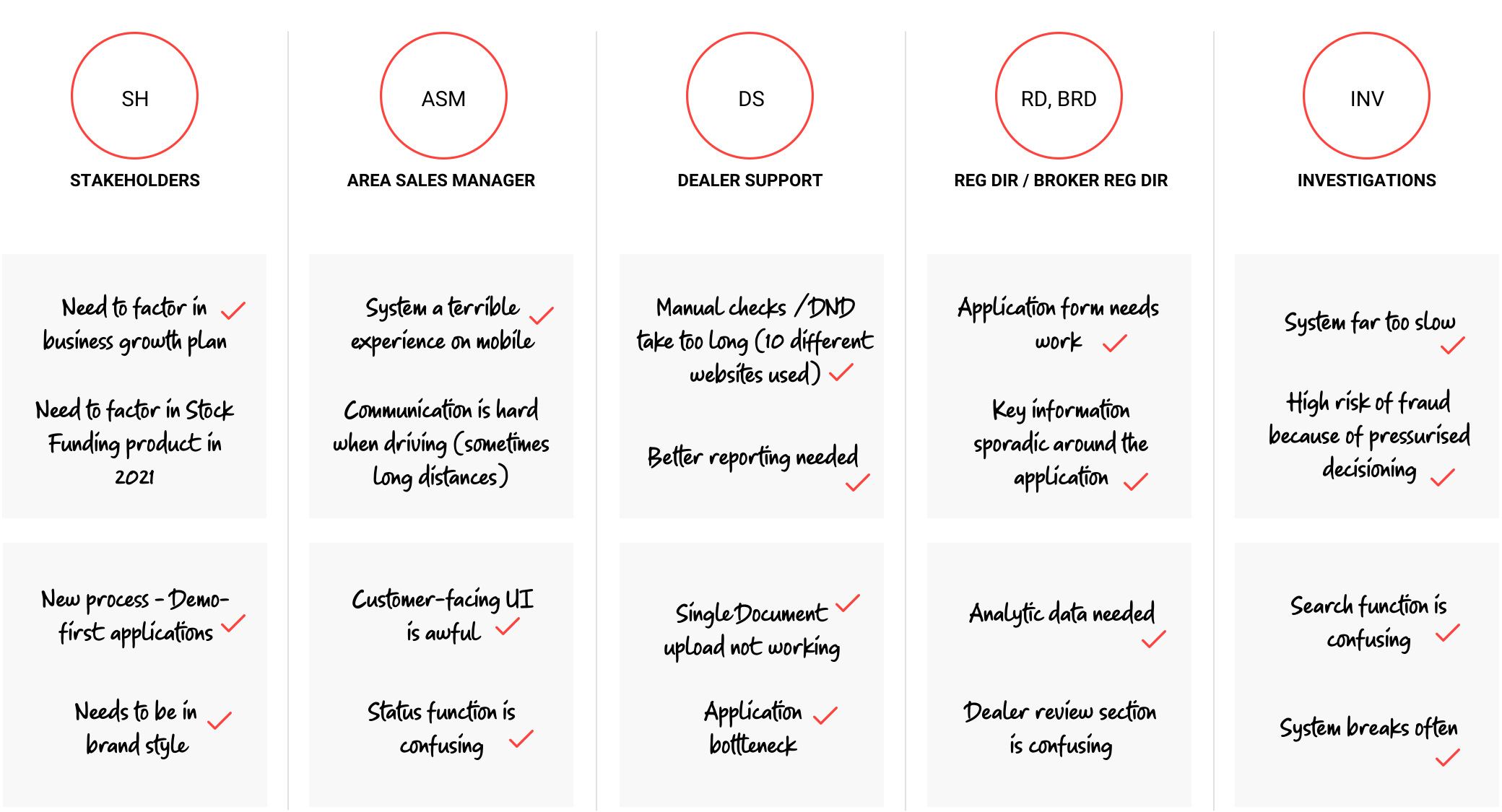
We synthesised findings from interviews, observation sessions, surveys, and a heuristic review to identify the highest-impact challenges within the dealer onboarding experience. While each user group faced different problems, recurring themes emerged around visibility, communication, manual effort and scalability.
Key insights
- Dealer onboarding had become increasingly difficult to scale.
- Critical workflows relied on manual processes and external tools.
- Communication and status visibility were fragmented across teams.
- Mobile experiences failed to support field-based users.
- Operational teams lacked reporting and insight into bottlenecks.
- The platform could not support future growth or product expansion.
DEFINE | FRAMING THE DESIGN CHALLENGE
After reviewing the findings with stakeholders and prioritising the most critical operational and user experience issues, we reframed the challenge into a clear design objective that would guide ideation and solution development.
Success would mean
- Reducing manual effort and duplicate work
- Improving ownership and status visibility across teams
- Supporting mobile-first workflows for Area Sales Managers
- Creating a platform that can scale with future business growth
'How might we create a faster, more transparent and scalable dealer onboarding experience for all user groups?'
DEFINE | PRIORITISING THE OPPORTUNITIES
We synthesised the research findings and worked with Product, Business Analysis and stakeholders to prioritise opportunities based on user impact, business value and technical feasibility. These priorities became the foundation for defining the design challenge and evaluating solution concepts.
Key priorities

DEFINE | REDEFINING THE APPLICATION WORKFLOW
The prioritisation exercise highlighted unclear ownership, inconsistent status management and fragmented communication as key barriers to efficient onboarding. Working with the Sales Director and Business Analyst, I redesigned the end-to-end workflow to clarify ownership, standardise status transitions and establish a shared operating model across all user groups.

Design principles established

IDEATION
Exploring solution concepts
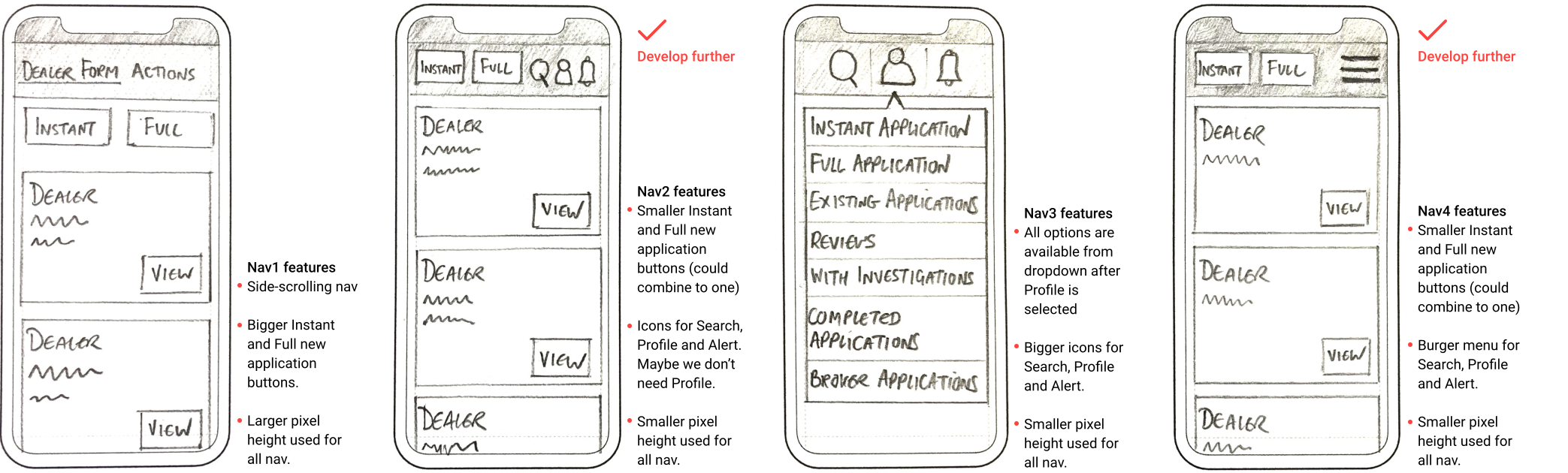
Using the priorities identified during the Define phase, I explored multiple concepts for navigation, search and application management. Early sketches allowed ideas to be evaluated quickly with stakeholders and users before investing time in higher-fidelity designs.
IDEATION | EXPLORING NAVIGATION CONCEPTS
The preferrer option was Option 2
Selected direction

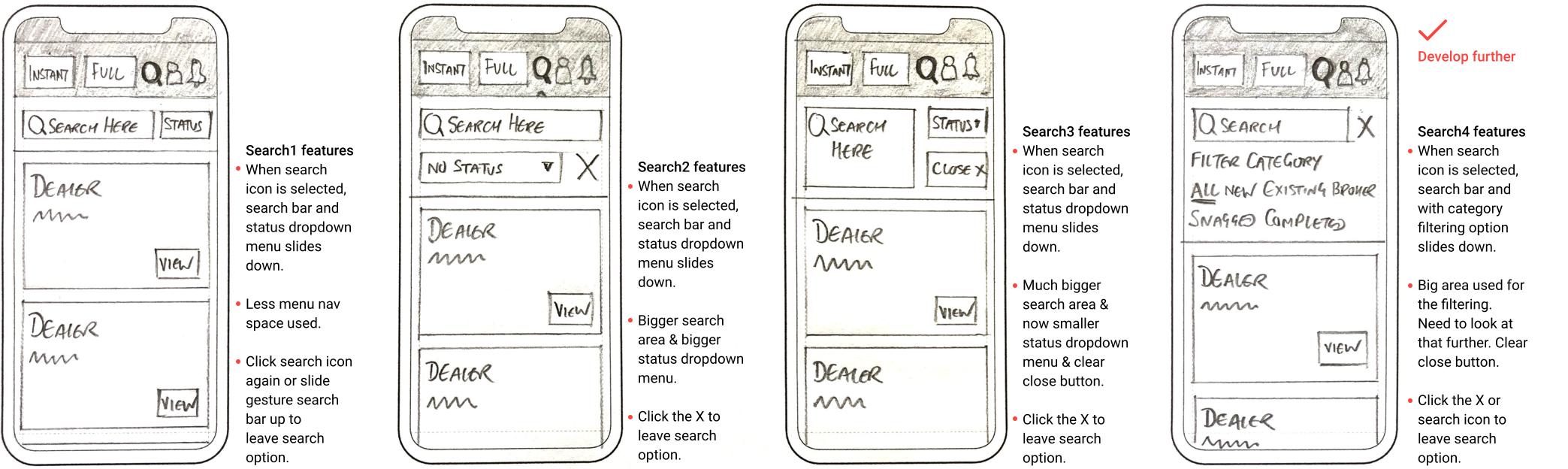
IDEATION | EXPLORING SEARCH & FILTERING
Search was identified as a key pain point during research, so multiple concepts were explored to balance speed, filtering and mobile usability.
Selected direction

IDEATION
Combining the best ideas
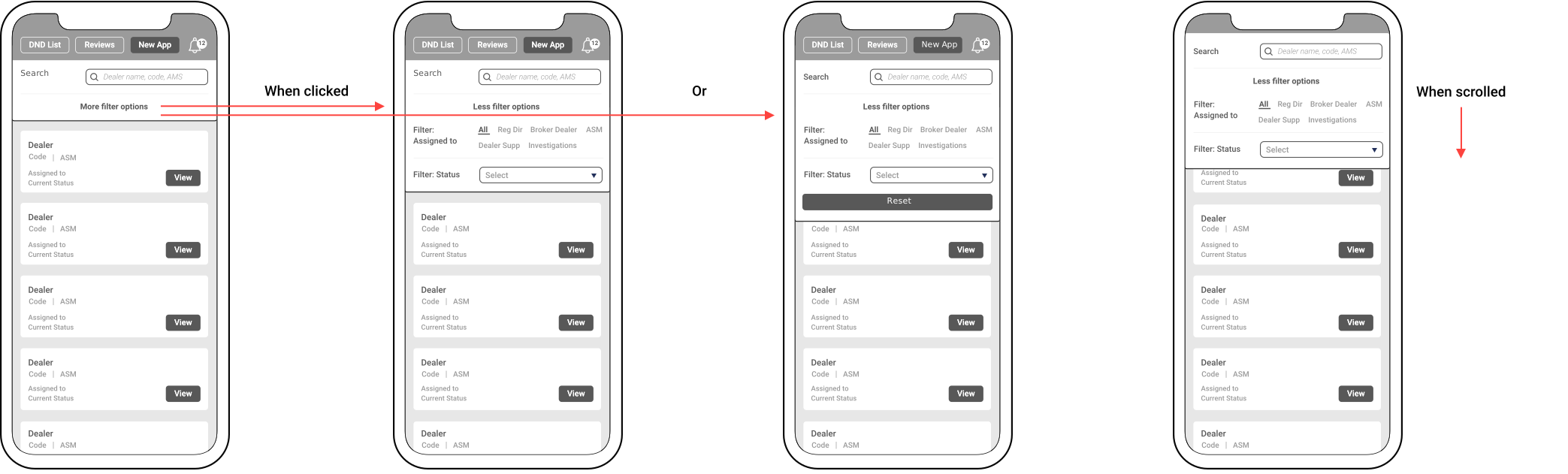
The selected navigation and search concepts were combined into separate desktop and mobile low-fidelity prototypes. Creating both experiences allowed us to validate workflows across office-based and field-based contexts, ensuring the solution met the needs of Dealer Support, Investigations and Area Sales Managers before investing in higher-fidelity design.
IDEATION | LOW-FIDELITY PROTOTYPE
The low-fidelity prototype focused on validating functionality, information architecture and interaction patterns before investing in visual design.
IDEATION | USABILITY TESTS
We conducted moderated usability sessions with representatives from each user group in their normal working environments. Participants completed realistic onboarding tasks, including locating applications, navigating between workflows and reviewing application statuses. The sessions helped validate the proposed interaction patterns and identify areas requiring further refinement.

IDEATION | TESTING INSIGHTS
The usability sessions validated several core design decisions while identifying opportunities for refinement. These findings directly informed the next iteration of the prototype before progressing to higher-fidelity designs.

IDEATION | RESPONDING TO TESTING FEEDBACK
Findings from usability testing informed the next iteration of the prototype. We focused on reducing ambiguity, improving workflow visibility and refining interactions that directly impacted task completion.

DELIVER | DESIGN SYSTEM FOUNDATIONS
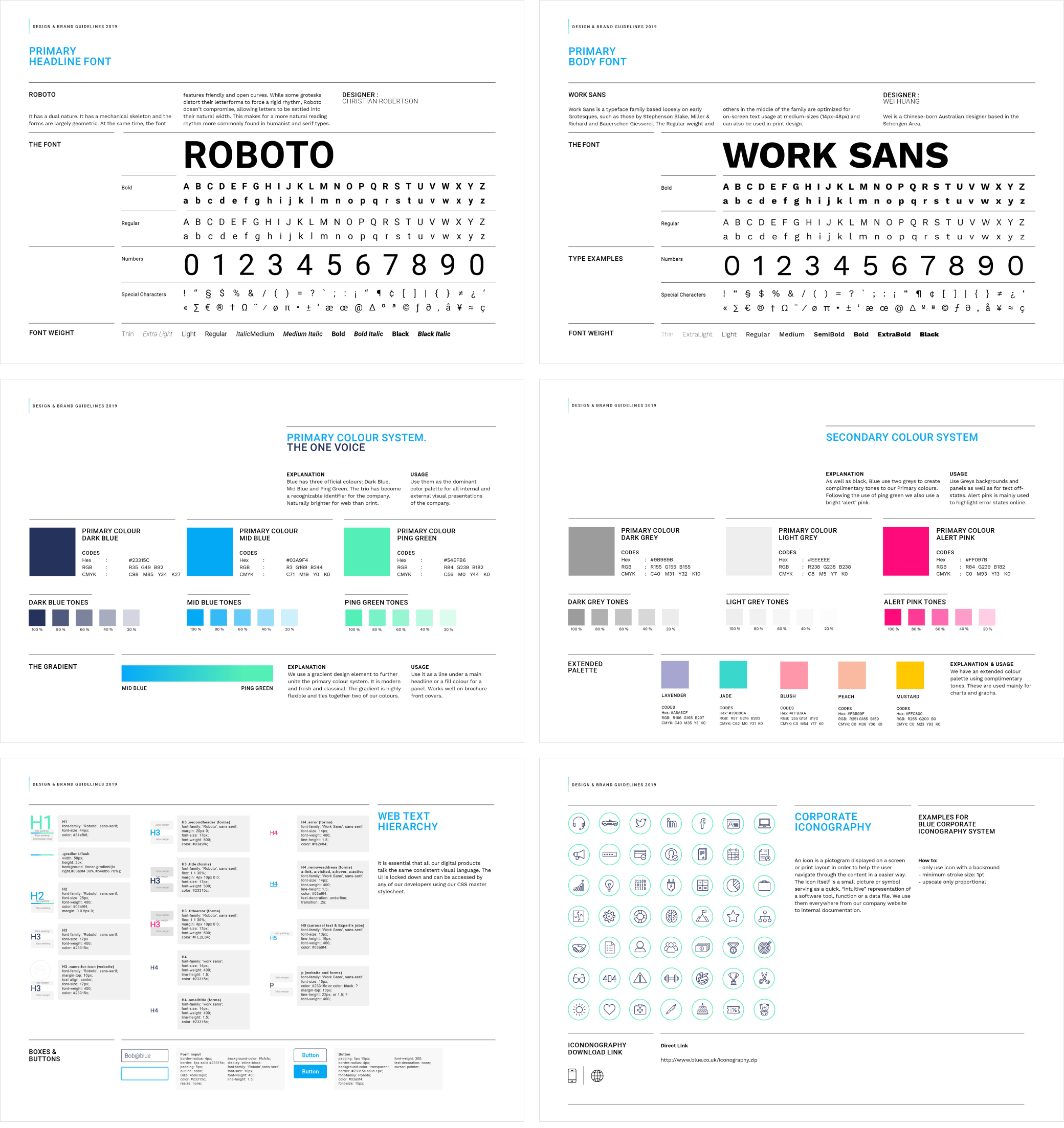
As part of establishing Blue's digital presence, I created the company's first design system and brand foundations from the ground up. This included typography, colour palettes, component libraries, UI patterns and usage guidelines that provided a consistent framework across products and platforms. The system accelerated design and development, improved visual consistency and created a scalable foundation for future growth.
DELIVER | HI–FIDELITY DESIGN
Insights from usability testing informed the final interaction model. The high-fidelity designs translated the validated workflow into a cohesive mobile-first experience, with a focus on application visibility, ownership and task completion. Search, filtering and status management were refined to help users quickly understand where an application sat within the process and what action was required next.

IMPLEMENTATION | DESIGN-TO-DEVELOPMENT HANDOFF
To ensure efficient implementation, I provided the development team with a complete set of design specifications, interaction guidance, user flows, copy and assets. Designs were shared through Zeplin, enabling accurate implementation and supporting an iterative design–development collaboration throughout the build phase.
DELIVER | PRODUCT LAUNCH
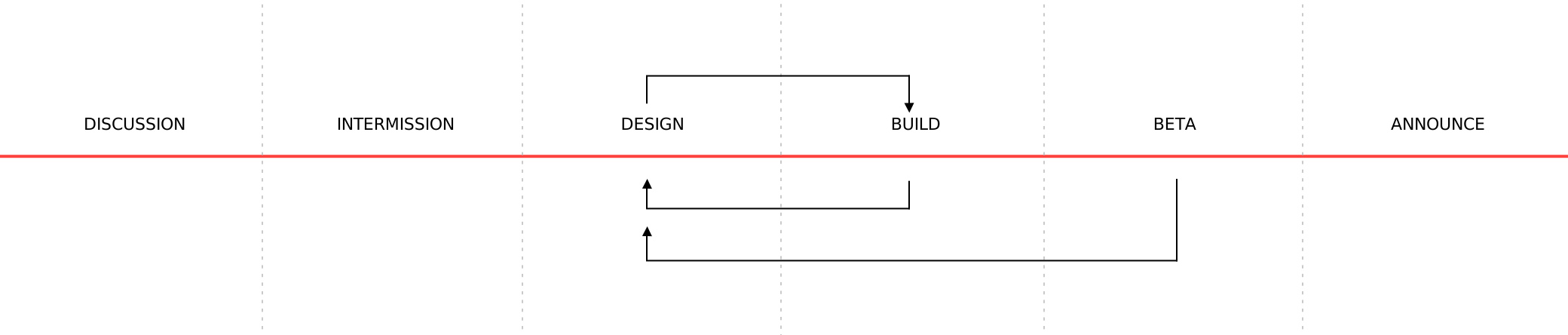
Following implementation, the beta release was tested with Dealer Support and Area Sales Managers in real-world scenarios. The final product delivered a mobile-first onboarding experience with clearer ownership, standardised status management and reduced reliance on manual communication throughout the application process.
The solution was subsequently rolled out as the foundation for the company's new Sales Support platform.

OUTCOMES
Measuring Impact
Tracking KPIs & metrics
Success measures were established at the outset of the project to evaluate improvements in efficiency, usability and user satisfaction. Post-launch testing demonstrated significant gains across all three areas, validating the redesigned workflow, mobile-first experience and clearer ownership model.
OUTCOMES | VALIDATING THE SOLUTION
The redesigned onboarding experience delivered measurable improvements in efficiency, usability and user satisfaction across all user groups.

OUTCOMES | FINAL THOUGHTS
The redesigned onboarding experience reduced operational friction, improved visibility and significantly increased efficiency across user groups. By combining workflow redesign, mobile-first UX and a scalable design system, the project delivered measurable improvements for both Dealer Support teams and Area Sales Managers.